
Job postings describe help desk work in the vocabulary of brochures: providing technical support, ensuring user satisfaction. Here is what the day actually looks like, hour by hour, because if you are about to build a path into this career, you deserve the unbrochured version.
8:00, the queue you inherited
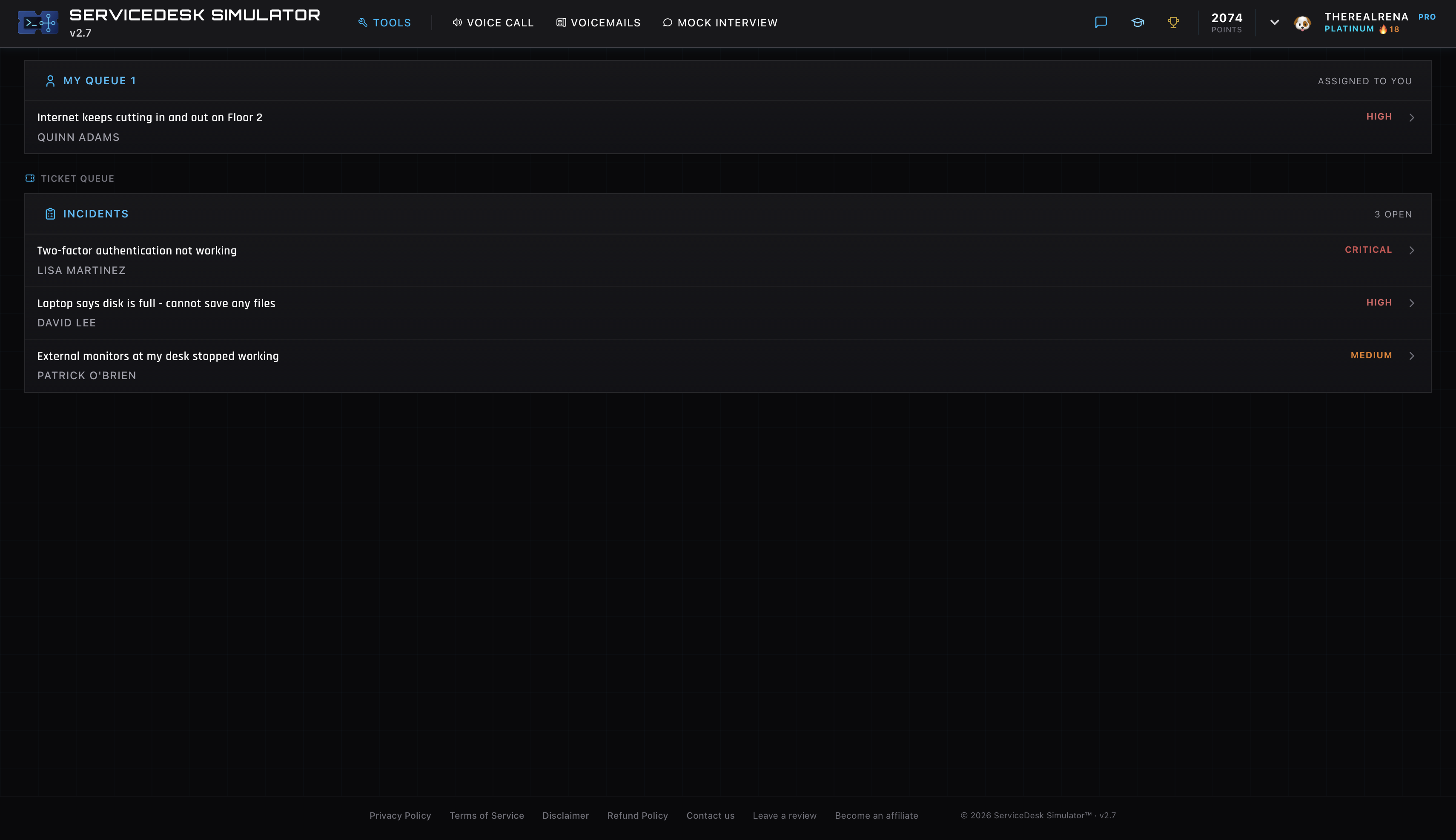
The shift starts with triage. Overnight, the queue collected whatever the evening produced: a few password resets, something vague about email, one ticket that just says “printer.” You skim, sort the quick wins from the escalations, and knock out the resets before the phones properly wake up, because every ticket closed before 9 a.m. is one that will not interrupt you at 11.
Somewhere in there is a daily standup, ten minutes with the team about yesterday’s leftovers and today’s known trouble. If something is already on fire, you find out here instead of from the fourth caller in a row.
9:00, the morning wave
People arrive at work, try to log in, and the phones start. The morning wave is heavy on lockouts and forgotten passwords, expired sessions, and yesterday’s problem that someone hoped would fix itself overnight. It did not.
This stretch is where you discover the job’s real ratio: maybe a third technical work, the rest communication. You are translating “the thing is broken again” into an actual symptom, keeping a caller calm while a machine reboots, writing notes the next tech can follow, explaining the same fix for the third time today without sounding like it. New techs expect to spend the day typing commands. You spend more of it talking, and the techs who talk well advance faster than the ones who only type well.
11:30, the weird one
Every day has one. The ticket that does not match any pattern: a laptop that blue-screens only in the dock, a user whose mapped drive vanishes every Tuesday, an application that works for everyone except the one person who needs it most.
This is the ticket that teaches you the most, and also the one that threatens your whole afternoon. Part of the craft is knowing when you are learning versus when you are stuck, and escalating with good notes at the honest moment instead of two prideful hours later.
1:00, the quiet middle
Lunchtime slows the queue, and the afternoon lull is where the other half of the job lives: following up on tickets waiting for parts or users, imaging a laptop for Thursday’s new hire, updating a knowledge-base article that lied to you this morning, chipping away at whatever small project the team gave you. Desks that look calm in the afternoon are doing the maintenance that keeps mornings survivable.
It is also when you study, honestly. Plenty of working techs use quiet stretches to chip away at the next certification, and reasonable managers look kindly on it, because a smarter tier 1 is cheaper than a bigger tier 2.
4:55, the closing act
An unwritten law of support: the most urgent ticket of the day arrives five minutes before you leave. An executive’s presentation will not open, and the meeting is at 8 a.m. You take a breath, open the ticket, and work the problem, because the alternative is that it waits for tomorrow’s queue with your name on the silence.
Then notes, handoff of anything still open, and done. The queue will refill overnight. It always does. That stops being demoralizing once you understand the queue is not a project to finish, it is a tide you learn to work.
What the repetition is actually doing
Some honesty: parts of this day repeat. You will reset a lot of passwords, and around month six the repetition can feel like a ceiling. It is the opposite. Every repeated ticket is a pattern getting burned in, and pattern recognition is the entire difference between a new tech and the calm one everybody trusts during an outage. Help desk compresses years of exposure to accounts, networks, hardware, and human beings into a very short time, which is exactly why so many sysadmins and engineers started here.
If you want to feel the rhythm before your first shift, the ServiceDesk Simulator runs this same day, queue, callers, weird ones and all, at whatever pace you can handle. The first real morning wave is a lot less intimidating when it is not your first.